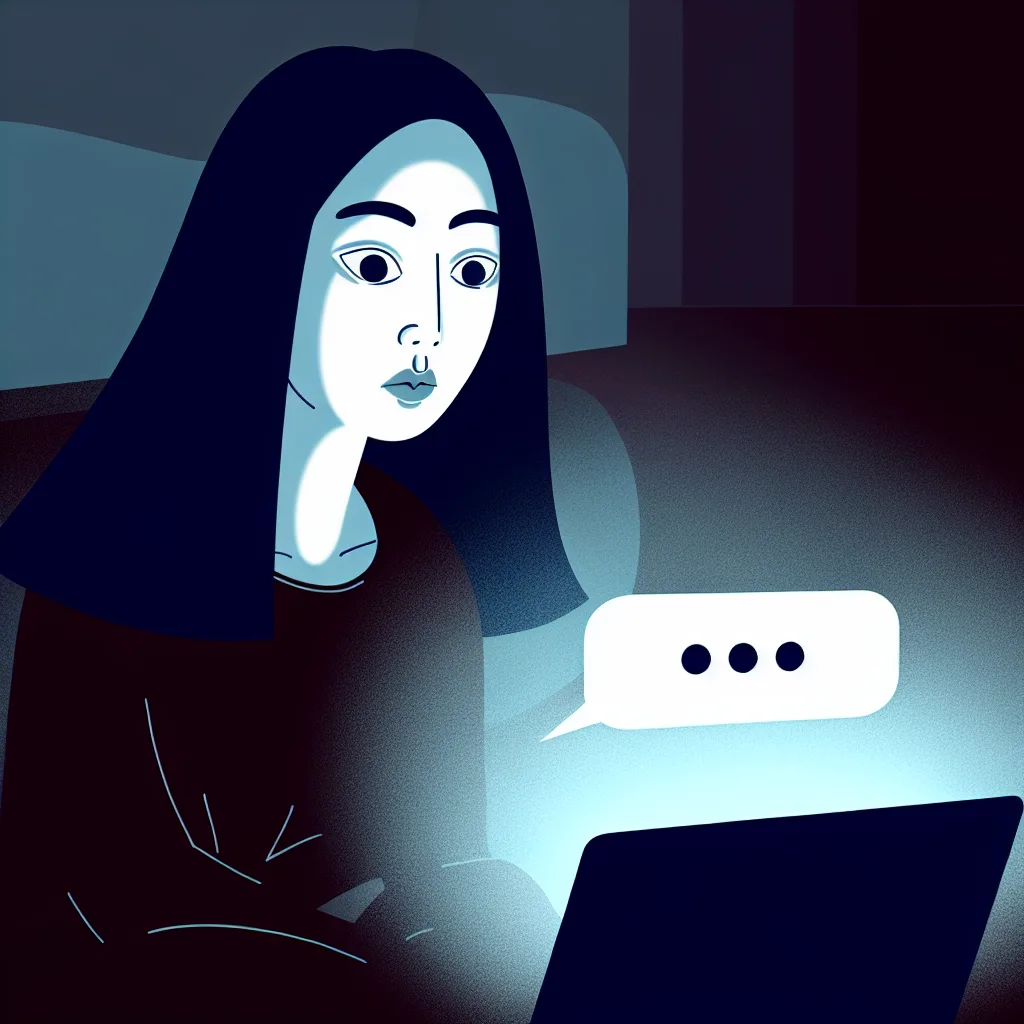
My weird experiment with ChatGPT turned into an unexpected, terrifying, and clarifying moment about my relationship.
It started as a simple, private exercise. A way to get my thoughts in order. For months, I’d been feeling a knot in my stomach about my marriage, a sense of unease I couldn’t quite name. So, I started keeping a list on my computer—a log of all the times my husband said or did something that hurt my feelings. The idea was to bring it to counseling, to have concrete examples instead of just saying, “He’s mean to me sometimes.” I wasn’t looking for AI relationship advice; I was just trying to create a coherent narrative out of my own confusion.
One night, staring at the long, painful list, I had a strange impulse. I opened a new tab, pulled up ChatGPT, and just… pasted it all in. I didn’t ask a specific question. I think I just wrote something like, “What do you make of this?” I wasn’t expecting much. Maybe a summary, or a list of common themes. What I got back was a punch to the gut.
The Raw Data of a Relationship
Keeping that list was harder than I thought. At first, it felt like I was betraying him, cataloging every misstep. But it was also clarifying. Instead of isolated incidents that could be brushed off as “a bad day” or “a misunderstanding,” I started seeing patterns.
The list wasn’t full of dramatic, movie-scene fights. It was subtle. It was the constant “jokes” at my expense in front of friends. The way he’d dismiss my professional accomplishments. The habit of giving me the silent treatment for days if I did something he disapproved of, forcing me to guess my crime. Each one, on its own, seemed small. But together, they painted a grim picture.
Still, I doubted myself. Was I being too sensitive? Was I misinterpreting things? This is the fog of a difficult relationship—it makes you question your own reality.
Why I Turned to an AI for Relationship Advice
So why paste this deeply personal, vulnerable list into an AI chat window? Honestly, I just wanted an objective opinion. A friend would take my side. My family would be biased. A therapist was the goal, but that felt like a huge, scary step. I wanted a sterile, purely logical analysis. I wanted a machine to look at the data points and tell me what they added up to, without emotion or preconceived notions.
I figured the AI would be like a calculator for emotions. It wouldn’t judge me. It wouldn’t get upset. It would just process the information. It felt safe, anonymous, and entirely without consequence. Or so I thought.
The Verdict: A Chillingly Clear Analysis
The response from ChatGPT came back in seconds, and it was nothing like I expected. It didn’t say, “It seems you are in a difficult situation.” It didn’t offer vague platitudes.
It was direct. It used phrases like “patterns of emotional abuse,” “manipulative behavior,” and “isolation tactics.” It systematically broke down my own list, categorizing the examples under clinical-sounding headings. Then, it did something I never could have predicted: it generated a step-by-step “escape plan,” complete with advice on securing finances, documenting everything, and seeking professional help from domestic abuse resources.
I just stared at the screen, my heart pounding. A robot, a string of code, had looked at the last year of my life and diagnosed it in a way I hadn’t allowed myself to. Seeing my vague feelings of unhappiness translated into such stark, unambiguous language was terrifying. And, in a strange way, it was validating. I wasn’t crazy. I wasn’t “too sensitive.” There was a name for what was happening. For more information on identifying these behaviors, resources like the National Domestic Violence Hotline offer clear and confidential guidance.
So, Is AI Relationship Advice a Good Idea?
My experience was a wake-up call, but it also raises a lot of questions. An AI is not a therapist. It has no empathy, no life experience, and no real understanding of human nuance. It’s a pattern-recognition machine. As one article from Psychology Today points out, there are real limitations and risks to relying on AI for mental health support.
However, for me, it provided something I desperately needed: a clear, unbiased reflection of the data I gave it. It cut through the emotional fog and showed me the patterns I was too close to see. It wasn’t the final answer, but it was the catalyst I needed to seek real, human help. It gave me the vocabulary and the courage to finally book an appointment with a licensed therapist, something I found through the American Psychological Association’s psychologist locator.
The AI didn’t save me, but it held up a mirror and forced me to look. And sometimes, that’s the first and most important step.